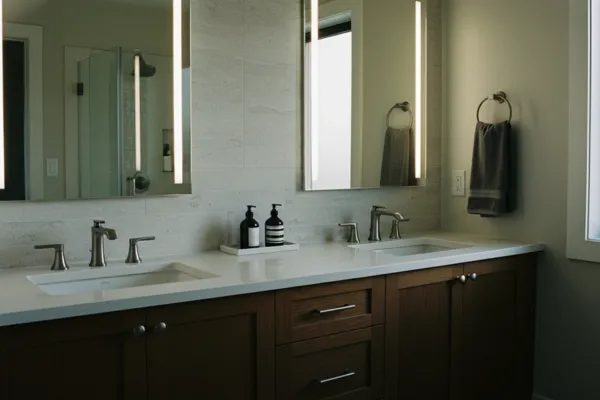
Single vs Double Sink Bathroom Vanity: Which Is Right for Your Space?
Bathroom remodels often start with a simple question and quickly turn into a series of tradeoffs. One common choice for homeowners is whether to install a single sink or a double sink bathroom vanity.
At first glance, the choice seems straightforward. Two sinks sound more convenient, especially for shared bathrooms. But once you factor in space, storage, cost, and how the bathroom is actually used day to day, the decision becomes more nuanced.
The right choice is not about following trends or doing what looks best in photos. It is about choosing a vanity layout that supports your routine, fits your space comfortably, and works long term.
This guide explains the real differences between single and double sink bathroom vanities. This will help you choose the best option for your home.
Why this decision matters more than most homeowners expect
A bathroom vanity does more than hold a sink. It controls how people move through the space, where storage lives, and how the bathroom functions during busy mornings.
Choosing the wrong layout can lead to:
Cramped walkways
Limited storage
Awkward spacing between fixtures
Daily frustration in shared bathrooms
Because vanities are a central fixture, changing them later is not simple. Getting the layout right from the beginning saves time, money, and headaches down the line.
What defines a single sink bathroom vanity
A single sink vanity features one sink basin paired with a cabinet designed to maximize storage and counter space around that sink.
Many people often choose this layout for its flexibility and efficiency. With one sink, more room is available for drawers, cabinets, and uninterrupted countertop space.
Single sink vanities are commonly used in:
Small bathrooms
Guest bathrooms
Powder rooms
Primary bathrooms where schedules are staggered
In many cases, homeowners are surprised by how functional a well-designed single sink vanity can be.
What defines a double sink bathroom vanity
A double sink vanity includes two sink basins within one cabinet run. This layout is designed to allow two people to use the vanity at the same time.
Double sink vanities are most often found in:
Primary bathrooms
Shared family bathrooms
Large bathrooms with generous wall space
While they offer convenience, they also introduce additional requirements for spacing, plumbing, and storage planning.
Space requirements and layout considerations
Space is the most important factor in deciding between a single or double sink vanity.
A single sink vanity can work comfortably in narrower bathrooms because it requires less overall width. This allows for better traffic flow and more flexibility with surrounding fixtures.
Double sink vanities require enough width to avoid crowding. Without proper spacing, two sinks can feel squeezed together, leaving little usable counter space and making the vanity feel cluttered.
When planning the layout, it helps to consider:
Total wall width available
Clearance for doors and drawers
Distance between sinks
Walkway space in front of the vanity
In many bathrooms, a single sink vanity paired with better storage and counter space performs better than a cramped double sink setup.
Storage differences between single and double vanities
Storage is where the tradeoff becomes clear.
Single sink vanities often provide:
Larger drawers
Deeper cabinet space
More flexible storage layouts
Double sink vanities divide the cabinet into two zones, which can reduce usable storage if not designed carefully. Plumbing for two sinks also takes up more internal space.
Well-designed double sink vanities account for this by customizing drawer placement and cabinet depth. Without thoughtful planning, storage can suffer.
Daily use and lifestyle considerations
How the bathroom is used matters more than how many people technically share it.
For couples with different schedules, a single sink vanity may work perfectly. For families where two people routinely get ready at the same time, double sinks can reduce morning bottlenecks.
Questions worth asking include:
Do two people regularly use the bathroom at the same time?
Is counter space more valuable than a second sink?
Will the bathroom need to accommodate children now or in the future?
There is no universal rule. The best choice reflects real habits, not assumptions.
Cost and plumbing implications
Double sink vanities are typically more expensive than single sink options. The added cost comes from additional materials, plumbing work, and installation complexity.
A double sink setup may require:
Extra plumbing connections
Wider countertops
Larger cabinetry
More labor during installation
Single sink vanities tend to be more budget-friendly and simpler to install, which can free up budget for higher-quality materials or custom storage solutions.
Resale value and long-term appeal
Some homeowners worry that choosing a single sink vanity may hurt resale value. In reality, resale impact depends on overall bathroom functionality, not just the number of sinks.
A spacious, well-designed single sink vanity can be more appealing than a poorly planned double sink setup. Buyers notice comfort, storage, and layout before counting sinks.
The goal should be creating a bathroom that feels intentional and functional, not forcing features that do not fit the space.
How custom cabinetry changes the decision
Custom bathroom vanity design often eliminates the compromises found in standard options.
With custom cabinetry, homeowners can:
Adjust vanity width to fit the room perfectly
Optimize storage around plumbing
Balance counter space and sink placement
Design layouts that feel open rather than crowded
This flexibility allows both single and double sink vanities to work better, especially in bathrooms with unique layouts or size constraints.
Common mistakes homeowners make
Even thoughtful remodels can miss the mark.
Common mistakes include:
Choosing double sinks in bathrooms that are too narrow
Sacrificing storage for symmetry
Ignoring clearance for drawers and doors
Designing for trends instead of daily routines
Avoiding these issues starts with planning the layout before choosing fixtures.
Key Takeaways
Single sink bathroom vanities offer flexibility, better storage, and work well in many layouts. Double sink vanities provide convenience for shared use but require adequate space and thoughtful design.
Storage, spacing, and daily habits matter more than trends. Custom cabinetry allows either option to be tailored to your space. The best choice is the one that fits how you actually use your bathroom.
Ready to choose the right vanity layout?
If you are deciding between a single or double sink bathroom vanity, a custom approach helps ensure the layout works for your space, routine, and long-term needs.
Use our quick form to share your bathroom dimensions, usage needs, and storage preferences. We will help you design a vanity that fits your home, not just the trend.

