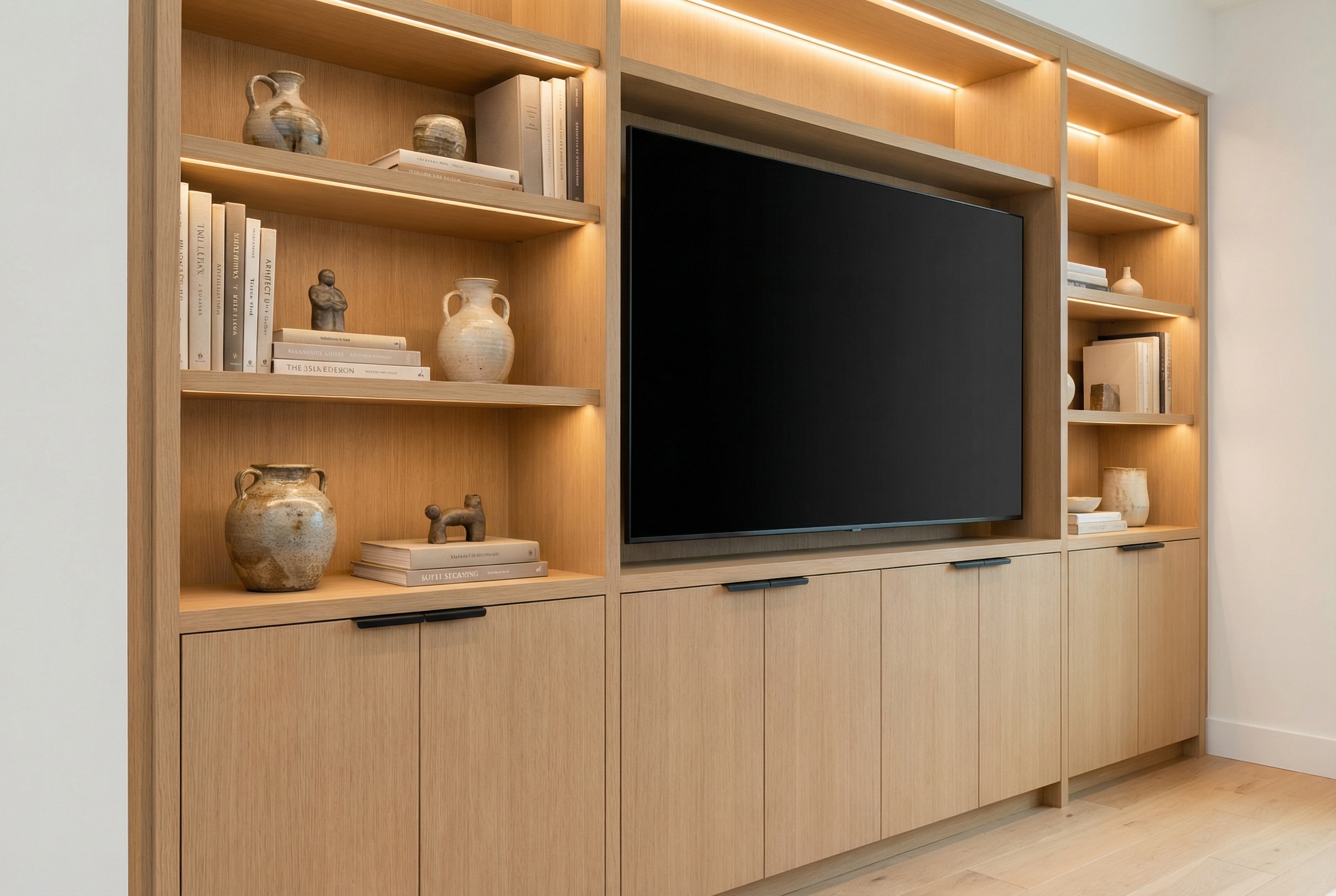
How to Design a Built-In Entertainment Center
Most people know what they want. A clean TV wall. Built-in shelving on both sides. No cords. Storage that actually works.
What stops most homeowners is not motivation. It is not knowing where to start.
Designing a custom tv wall is not as complicated as it looks. But it does require planning in the right order. Skip a step and you end up with a beautiful unit that does not quite work for your room.
This guide walks through the design process from start to finish so you get it right the first time.
Start with the wall, not the style
The most common design mistake is choosing a style before understanding the space.
Your wall sets the rules. Everything else works around it.
Before you look at a single inspiration photo, measure your wall and note what is on it. Outlets, cable ports, light switches, and vents all affect where cabinetry can go and how deep it can be.
Also note what surrounds the wall. Door swings, windows, and adjacent furniture all impact how wide the unit should run and where it should stop.
Getting these numbers right at the start saves a lot of frustration later.
What to measure before you plan anything
Take these measurements before you sketch a single idea:
Wall width from corner to corner or between architectural breaks
Ceiling height from floor to the lowest obstruction
Depth available before the unit interferes with traffic flow
Location of all outlets, cable ports, and wall switches
Location of any HVAC vents that cannot be blocked
Distance from the TV wall to the main seating area
That last measurement matters more than most people expect. A wall mounted TV that is too high or too far from the sofa creates neck strain and kills the viewing experience no matter how good the cabinetry looks.
Decide what the unit needs to do
A custom entertainment center can handle a lot. The key is deciding what yours actually needs to handle before the design gets locked in.
Think through every item that currently has no real home in the living room. Gaming consoles, streaming devices, a soundbar, a cable box, remotes, books, kids' items, board games, decorative objects.
Each category needs its own type of storage. Open shelving works well for decor items and books. Enclosed storage cabinets hide the things you want out of sight. Dedicated media center compartments keep components ventilated and accessible.
Write the list before you design. It tells you how much storage you need and what kind.
Plan your TV placement first
The television is the anchor of the entire design. Everything builds around it.
Decide on screen size before finalizing dimensions. A 75-inch TV needs more surrounding cabinetry to feel balanced than a 55-inch screen does. The proportions shift based on the size of the display.
For wall mounted installations, plan where the mount will go and route the cable management path before any cabinetry gets built. In-wall cable routing is much easier to plan ahead than to retrofit later.
Also consider viewing height. The center of the screen should sit at or slightly below eye level when seated. In most living rooms, that puts the TV lower than people initially expect.
Balance open and closed storage
One of the most important design decisions is how much of the unit stays open and how much stays behind doors.
Open shelving looks great in photos. In real life, it requires consistent styling and tidying. If your household is busy, all-open built in shelving can feel cluttered within a week.
Enclosed storage cabinets with doors keep clutter hidden. They also make the overall unit look cleaner from across the room. The tradeoff is slightly less visual interest.
Most successful entertainment wall unit designs use both. Open shelving for curated items and closed cabinets for everything else. That balance keeps the unit looking intentional without requiring daily maintenance.
Think about the finish before you finalize the design
Finish is often treated as a final decision. It should be one of the first.
The finish of your built in wall units needs to work with the existing room. Flooring tone, wall color, trim color, and the furniture in the space all affect which finish looks intentional and which looks like it was dropped in.
Warm wood tones like white oak work well in rooms with warm neutrals and natural materials. Painted finishes in white or off-white blend cleanly with traditional trim and lighter walls. Darker stains add drama but require the rest of the room to support them.
Hardware is the final layer. Matte black pulls read as modern. Brass reads as warm and transitional. Brushed nickel leans traditional. Choose hardware that matches other metals already in the room.
Plan for lighting early
Lighting is one of the most overlooked parts of entertainment center design. It is also one of the biggest differences between a built-in that looks custom and one that looks like furniture.
In-cabinet lighting highlights open shelving and makes the unit feel built into the architecture of the room. LED strip lighting inside shelves and above the TV creates a warm ambient glow that works even when the room is dim.
If you want lighting in the unit, plan the wiring before construction starts. Adding it afterward is costly and disruptive. A few minutes of planning saves a significant amount of rework.
When to bring in a custom builder
Some homeowners design a unit and source the components themselves. Others work with a custom cabinetry company from the beginning.
Working with a custom builder from the start typically produces a better result. They can identify problems with the space before construction begins, suggest storage configurations based on how you actually use the room, and build to tolerances that standard furniture cannot match.
A media wall unit built by a skilled craftsman also handles the details that trip up DIY builds — precise fitting around outlets, flush alignment with trim and molding, and finishes that hold up to daily use.
The design conversation is also part of the value. A good builder helps you make decisions you did not know you needed to make before it is too late to change them.
Key Takeaways
Measure the wall first. Every design decision follows from the actual dimensions of the space.
List what you need to store before you design. Storage type drives cabinetry layout.
Plan TV placement and cable management before cabinetry gets locked in.
Balance open shelving with enclosed storage cabinets for a unit that looks good every day.
Choose a finish that works with the existing room, not just the entertainment center itself.
Plan lighting wiring early. Adding it later costs more and disrupts the build.
A custom builder catches problems before they become expensive mistakes.
Ready to start planning your entertainment wall?
If you know you want a built-in but are not sure where to start, a design conversation can clear up a lot of the early decisions.
Use our quick form to share your wall dimensions, what you need to store, and a few photos of the space. We will help you design a custom tv wall that fits your room and your life.

