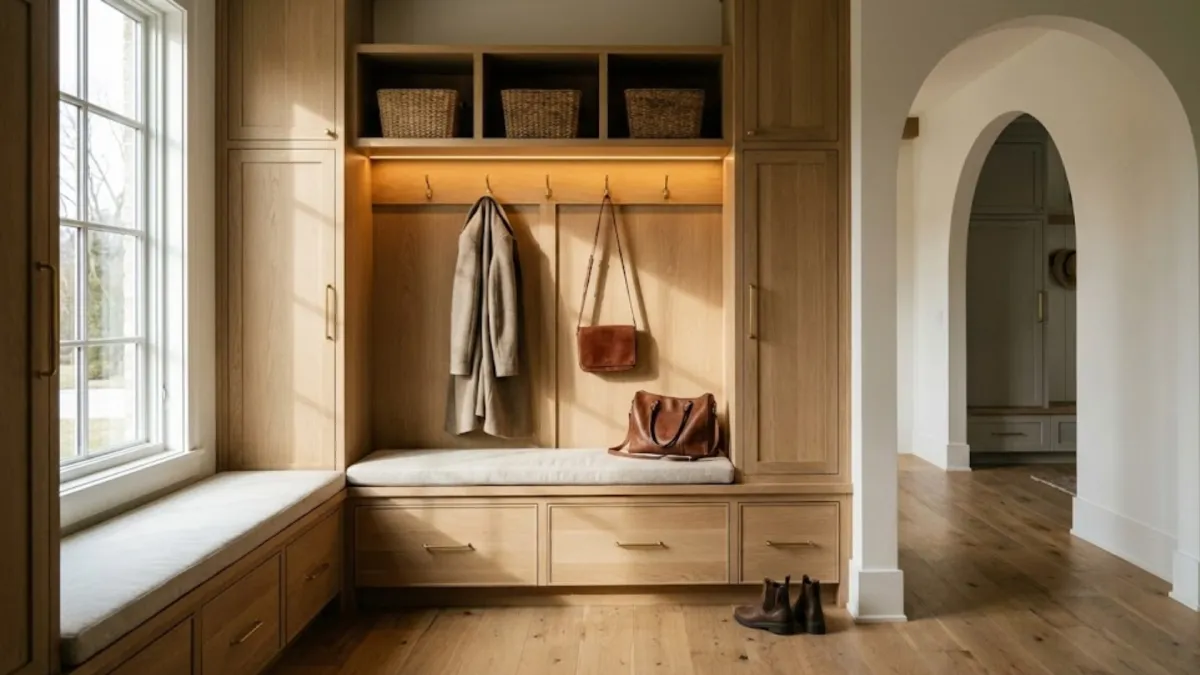
Hall Trees for Small Spaces: Complete Buying Guide
Small entryways have a way of creating daily chaos. One pair of shoes becomes five. A jacket lands on a chair. Bags pile up on the floor because there is no obvious place for them to live.
The fix is not more willpower. The fix is a better system that works with limited square footage.
Hall trees for small spaces work because they combine the functions you need near the door into one vertical zone. You get a place to hang outerwear, a spot to sit, and storage that keeps clutter from spreading. The key is choosing a layout that fits your exact dimensions and your real routine.
This guide walks you through what to look for, what to avoid, and how to choose a setup that keeps your entryway open, organized, and easy to live with.
Why small entryways feel messy so fast
In a tight entryway, even small items create visual clutter because there is no buffer space. In larger homes, a few shoes by the door do not look like a problem. In a narrow hallway, they become the whole room.
Most compact entryways also have one or more of these challenges.
They are pass through spaces, not destination spaces. People are moving in and out quickly, so drop zones matter. Door swings and walkways limit furniture depth. The area often lacks built in storage, so every item becomes a surface problem.
That is why vertical organization is so effective. When you move storage up the wall, you protect the floor and keep the pathway clear.
What a great space saving entryway setup includes
A functional entryway solution usually blends three elements. It is not about packing in features. It is about matching the features to how your household actually uses the front door.
First, you need a hanging zone for coats, backpacks, and purses. Hooks are simple, but spacing matters. Too close together turns into a tangled mess.
Second, you need a landing zone for shoes. This is where most clutter starts, so a dedicated shoe area changes everything.
Third, many homes benefit from a small seat. A bench makes it easier to put on shoes and it prevents people from sitting on random furniture and leaving items behind.
A good design uses these elements without taking over the space. The best options feel intentional and calm, not bulky.
Choosing the right size and layout
Before you pick a style, treat this like a simple design project. Measure first, then decide on function, then pick a look.
Start by measuring three things.
Width of the wall you want to use.
Maximum depth that still allows comfortable passage.
Height available before trim, windows, or wall features interfere.
Next, think about what your household needs most. If shoes are the problem, prioritize shoe storage. If backpacks and coats dominate, prioritize hooks and an upper shelf. If kids live here, the bench and lower hooks matter more than a tall cabinet.
A quick rule that helps. In a tight entryway, depth is usually the enemy. Many homeowners focus on width, but a piece that sticks out too far is what makes a space feel cramped.
Best configurations for compact entryways
Different homes require different solutions. Here are the layouts that tend to work best in limited space.
Slim profile wall focused designs
These setups keep the footprint light and rely on wall height for organization. They are ideal for apartments or narrow hallways where the goal is to keep the floor as open as possible.
A strong version includes hooks at shoulder height, a small upper shelf for hats or baskets, and a tight shoe zone below.
Bench plus shoe storage combinations
This is one of the most practical options for everyday living. You get comfort, and you get containment.
Look for storage that matches how you store shoes. Some homes do well with open cubbies because they are quick. Others prefer concealed compartments because they reduce visual noise. Both can work, but the best choice depends on how tidy your household is on a normal weekday.
Narrow width options for tight walls
When wall width is limited, you can still create order by focusing on essentials. A narrower unit with fewer hooks and a focused shoe area can outperform a larger piece that does not fit the space correctly.
In very tight entryways, fewer features often produces a better result. The goal is control, not maximum storage at any cost.
Vertical storage for families with lots of gear
If you have kids, sports bags, or work gear, vertical storage becomes even more important. Extra hooks, an upper shelf for bins, and a durable bench surface can create a drop zone that actually survives real life.
A common improvement is giving each person a dedicated hook and a dedicated shoe spot. That one change reduces the daily pile effect.
Materials and finishes that work in small spaces
Material choices affect how large a piece feels visually. Heavy dark finishes can make a tight entryway feel smaller. Light wood tones, clean painted finishes, or balanced contrast can make the area feel more open.
Durability matters too. Entryways see moisture, dirt, and impact. You want finishes that hold up and are easy to wipe down.
Instead of focusing on what is trendy, focus on what matches the rest of your home. When the entryway looks integrated, it feels calmer.
Custom vs store bought options
Mass produced furniture is built for average spaces. Small entryways are rarely average. This is where custom work becomes less of a luxury and more of a functional advantage.
A custom solution can be built to the exact depth your walkway allows. Hooks can be placed where they are actually usable. Shoe storage can be designed around how many pairs you realistically need to store near the door. The finish can match existing cabinetry or trim so the space feels like part of the home, not an add on.
For compact layouts, those details are what turn a cramped entry into a clean and organized zone.
Common mistakes that make small entryways worse
The most common mistake is buying something that is too deep. It may look fine online, but it steals walkway space in real life.
Another mistake is overloading the piece with compartments and doors. In small spaces, too many panels can feel visually heavy.
The third mistake is failing to plan for the daily routine. If the storage is not where people naturally reach, they will not use it. A beautiful unit that does not match habits becomes clutter itself.
A simple way to avoid these problems is to design around what you do on the way in and what you do on the way out.
Key Takeaways
Hall trees for small spaces work best when they are shallow, vertical, and designed around real habits. A bench plus shoe storage layout is often the most practical. Lighter visual profiles help compact entryways feel more open. Custom sizing can be the difference between functional and frustrating. The best design protects walkway space and creates a clear drop zone.
Ready to plan a better entryway?
If your entryway is tight, a made to fit solution can give you the storage you need without crowding the space.
Use our quick form to tell us your wall width, your depth limit, and what you need to store. We will recommend a layout that fits your home.

