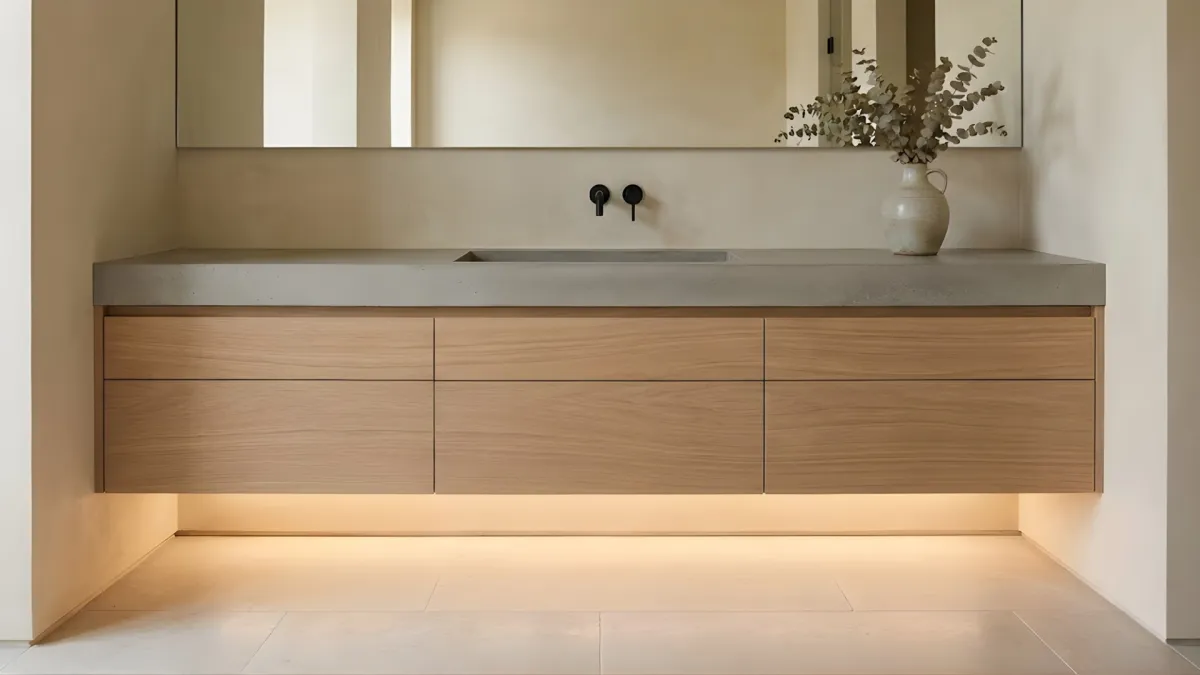
Are Floating Bathroom Vanities a Good Fit for Your Home?
Bathroom remodels tend to start with inspiration and end with questions. A photo looks clean and modern online, but once you start planning, doubts creep in.
Floating bathroom vanities are a perfect example. They look sleek. They feel modern. They promise a lighter, more open bathroom.
At the same time, many homeowners worry about stability, storage, and whether the design actually works for real life.
The answer is not a simple yes or no.
Floating bathroom vanities can be a great fit for some homes and a frustrating mistake for others. The layout, lifestyle, materials, and construction of the vanity create the difference.
This guide walks through the real pros and cons, when floating vanities make sense, when they do not, and how to decide if this style is right for your home.
Why floating bathroom vanities have become so popular
Floating vanities did not appear overnight. Their rise is tied to broader shifts in bathroom design and how people think about space.
In many modern and European-inspired homes, wall-mounted vanities are used to create visual openness. By lifting the cabinet off the floor, the room feels larger, cleaner, and less crowded. This effect is especially noticeable in smaller bathrooms.
Another reason for their popularity is maintenance. With open floor space underneath, cleaning becomes easier. There are no legs or toe kicks trapping dust and moisture.
Floating designs also align well with minimalist aesthetics. Clean lines, fewer visual breaks, and simpler forms appeal to homeowners looking for a modern look that does not feel bulky.
That said, popularity does not always equal practicality. Understanding the tradeoffs matters.
The most common concerns homeowners have
When people debate floating vanities online, the same concerns come up again and again. These are not unfounded worries. They are practical questions worth answering.
Many homeowners raise concerns about:
Stability and weight support
Reduced storage compared to floor-mounted options
Durability of materials in wet environments
Safety in homes with children
Higher cost and installation complexity
These concerns usually stem from experiences with poorly built or mass-produced options. The design itself is not the problem. Execution is.
Stability and wall support
A floating vanity is only as strong as what is behind the wall.
In properly built installations, wall blocking or reinforced framing supports the full weight of the cabinet, countertop, sink, and daily use. When done correctly, the vanity does not flex or move.
Problems arise when floating vanities are treated like standard furniture. Anchoring into drywall alone or skipping proper support leads to instability over time.
This is why professional installation and proper structural planning matter more for wall-mounted designs than for floor-mounted ones.
Storage limitations and daily usability
Storage is one of the biggest tradeoffs to consider.
Floor-mounted vanities often provide more internal volume because they extend to the ground. Floating designs usually sacrifice some storage to maintain their lighter appearance.
That does not mean they cannot work well. It means storage must be designed intentionally.
Well-planned floating vanities often include:
Deeper drawers instead of lower cabinets
Efficient internal organizers
Custom layouts based on what you actually store
If your household needs maximum storage for toiletries, towels, or cleaning supplies, a floating design may require compromises or creative solutions.
Floating vs floor-mounted bathroom vanities
Understanding the difference helps clarify expectations.
Floating vanities excel at:
Making small bathrooms feel larger
Creating a modern or minimalist look
Improving floor visibility and cleaning access
Floor-mounted vanities excel at:
Maximizing storage
Offering simpler installation
Providing a more traditional appearance
Neither option is inherently better. The right choice depends on the space and how the bathroom is used.
Homes with children and heavy daily use
Families with young children often hesitate to choose floating designs, and that hesitation makes sense.
Kids lean, climb, and pull. A poorly supported vanity can become a safety concern. Storage needs also tend to be higher in family bathrooms.
That said, floating vanities are not automatically off the table for families. Reinforced mounting, durable materials, and proper height placement can make them work even in busy homes.
The key involves acknowledging how people will actually use the bathroom, not just how it looks in photos.
Material choices matter more than the style
Material selection plays a major role in long-term performance.
Many budget floating vanities use MDF or particleboard. In humid environments, these materials can swell, warp, or degrade over time if not properly sealed.
Solid wood, high-quality plywood cores, and moisture-resistant finishes hold up far better. The same design built with different materials can have very different lifespans.
This is where custom construction often outperforms off-the-shelf options. Materials can be chosen specifically for the environment they will live in.
Cost and plumbing considerations
Floating vanities are often more expensive than traditional ones. The added cost comes from several factors.
Structural reinforcement may be required inside the wall. Plumbing often needs to be adjusted to align with the new mounting height. Installation is more precise and labor-intensive.
While the upfront cost can be higher, many homeowners decide the visual impact and functionality are worth it when done correctly.
When a floating bathroom vanity makes sense
There are scenarios where floating designs shine.
They tend to work best in:
Small bathrooms where visual space matters
Primary bathrooms with lighter daily use
Modern or contemporary homes
Remodels where walls can be reinforced properly
In these cases, the benefits often outweigh the drawbacks.
When a floating vanity may not be the best choice
There are also situations where a traditional vanity is the better option.
Floating designs may not be ideal for:
Bathrooms needing maximum storage
Households with very young children
Remodels with limited wall access
Budgets that cannot accommodate structural changes
Choosing the right option is about honesty, not trends.
Why custom-built floating vanities solve most concerns
Many of the issues people experience with floating vanities come down to generic design.
Custom-built options allow for:
Proper wall support planned from the start
Storage designed around real needs
Durable materials suited for bathrooms
Height and depth tailored to the space
Instead of forcing a design to fit, the design is built to fit the home.
Common mistakes homeowners make
Even well-intentioned remodels can go wrong.
Common mistakes include:
Choosing style before function
Ignoring storage needs
Underestimating installation complexity
Selecting materials not suited for moisture
Avoiding these mistakes starts with planning, not purchasing.
Key Takeaways
Floating bathroom vanities can be a great fit when designed and installed properly. They work best in spaces where visual openness matters and storage needs are manageable.
Material choice, wall support, and lifestyle considerations all play a critical role. Custom-built solutions often eliminate the most common concerns.
Ultimately, the ideal option is the one that aligns with your actual bathroom usage habits.
Ready to plan a vanity that fits your home?
If you are considering a floating bathroom vanity, a custom approach helps ensure the design works for your space, your routine, and your long-term needs.
Use our quick form to share your bathroom dimensions, storage requirements, and style preferences. We will help you determine whether a floating vanity is the right fit and design a solution that works.

