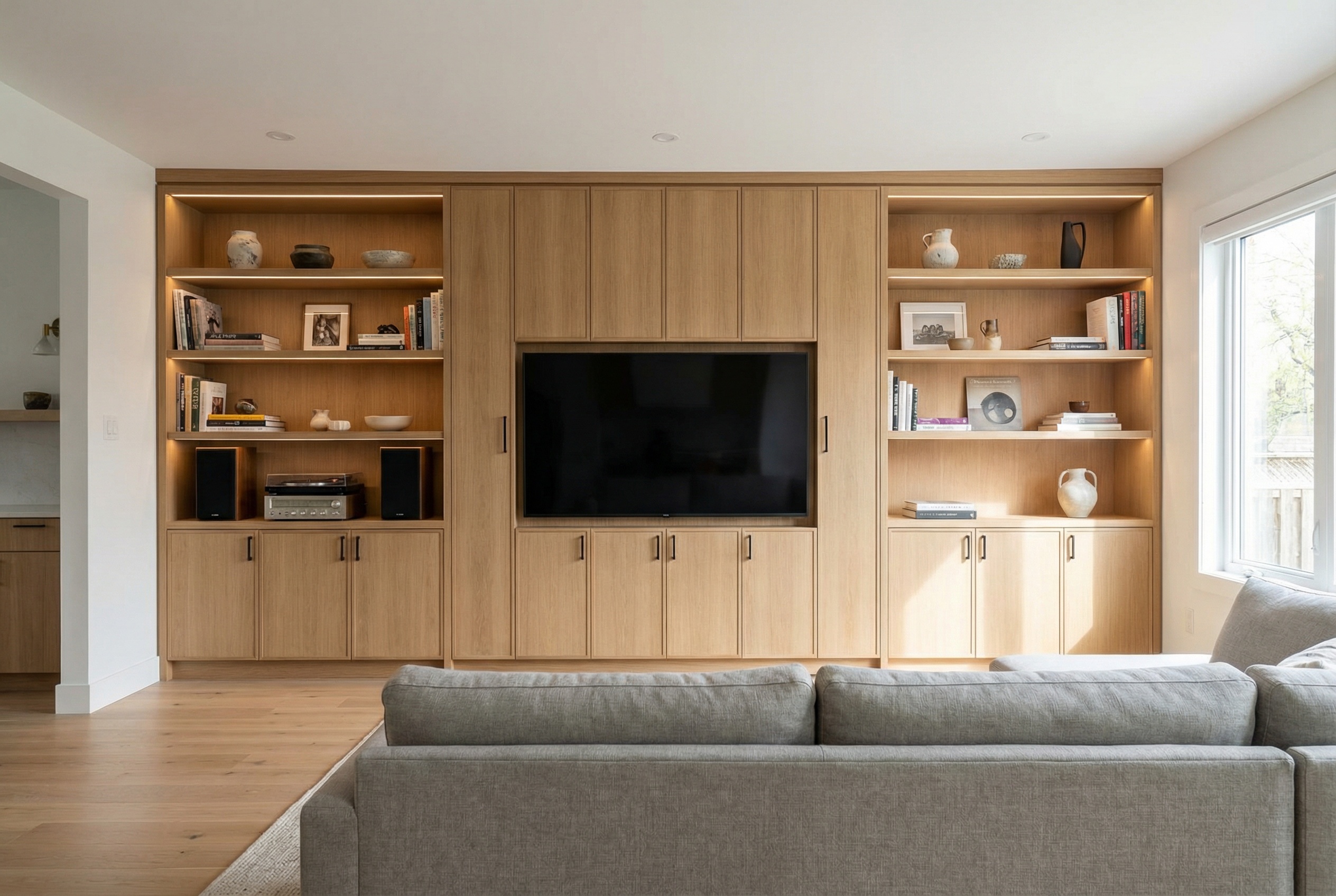
Built-In Entertainment Center vs Standalone TV Unit
You put together a nice living room. Good furniture. Clean walls. A solid layout.
Then you look at the TV area and something feels off.
A standalone TV stand sits against the wall. Cords run in every direction. Components stack on shelves that were never designed for them.
It works. But it does not look like the rest of the room.
That gap is what this decision is really about. A custom entertainment center and a standalone tv entertainment center both hold a television. But they do very different things for your living space.
Here is an honest look at both so you can choose the right one for your home.
What is a standalone TV unit?
A standalone TV unit is freestanding furniture. It sits on the floor and holds your television, media components, and sometimes a few decorative items.
Most homes start here. It is the fastest and least expensive way to set up a TV area.
Standalone tv stands and media centers come in many styles and sizes. Some are simple and low-profile. Others include open shelving, drawers, and enclosed storage cabinets.
The main advantage is flexibility. You can move it, swap it out, or rearrange the room without much effort.
The main limitation is fit. Standalone units come in standard sizes. They rarely match your exact wall, room height, or storage needs.
What is a built-in entertainment center?
A built-in entertainment center uses custom cabinetry designed for your specific wall and room. Builders anchor it to the space rather than placing it in front of the wall.
A well-designed custom entertainment center can span floor to ceiling. It can wrap around a fireplace or fill an awkward alcove that no standard furniture would fit.
Built-in wall units do more than hold a TV. They create a full wall storage solution for books, gaming consoles, speakers, decor items, and anything else the living room needs to house.
Built in shelving on either side of the television adds display space without taking up floor space. The result feels intentional. The room looks designed, not assembled.
Key differences between the two
Here is how the two options compare across what matters most:
Fit: Standalone units work within standard dimensions. A built in wall unit fills your exact wall.
Storage: Standalone units offer limited storage. Built-ins hold everything the room needs.
Appearance: Standalone furniture sits in the room. A built-in entertainment center becomes part of the room.
Cable management: Standalone units leave cords exposed. Built-ins route cables cleanly behind the wall.
Flexibility: You can move or replace standalone units easily. Built-ins are a permanent home improvement.
Cost: Standalone units cost less upfront. Built-ins carry a higher upfront cost but add lasting home value.
When a standalone TV unit makes sense
A standalone unit is a practical choice in certain situations.
You rent or plan to move soon. A built-in is permanent. If the space is temporary, a quality standalone tv stand is the smarter move.
The room is a secondary space. A guest room or basement TV area may not need a full custom entertainment center. A well-built standalone piece works fine there.
Your storage needs are simple. If you only need to hold a TV and a streaming device, a basic media center handles that without added complexity.
Budget is the main concern right now. A standalone unit sets up the space today while you plan for a built-in later.
When a built-in entertainment center is the better choice
A custom entertainment center makes the most sense when the living room is the main gathering space in the home.
The TV wall is the focal point of the room. In most living rooms, every seat faces the television. A wall mounted tv inside a built-in media wall unit turns that focal point into something finished and intentional.
You have more to store than a standalone unit can handle. Gaming consoles, streaming devices, speakers, remotes, books — they all need a home. Built in shelving and storage cabinets give each item its own dedicated space.
Cords and cables bother you. Built-ins allow for in-wall cable routing. That one change transforms how the tv walls look.
The wall has an awkward shape. Alcoves, sloped ceilings, fireplaces, and odd angles are hard for standard furniture. A custom tv wall unit works around the actual architecture of the room.
You plan to stay in the home. A built-in adds real value to the property. It is a home improvement, not just a furniture purchase.
The look that standalone units rarely deliver
Here is the honest part of this comparison.
A standalone TV unit, even a well-made one, sits in front of the wall. A gap almost always shows. Cords find a way to appear. The unit rarely matches the trim, floor, or surrounding furniture.
A built-in entertainment center does not have that problem. It sits flush with the wall. The finish matches the room. Open shelving and storage cabinets are sized for the space, not based on a product page.
That difference shows up every day. It changes how the room feels and how guests experience the space.
Homeowners who care about how the living room looks — not just how it works — usually already know a built-in is the answer. They are just confirming it.
Key Takeaways
Standalone TV stands and media centers are flexible and affordable but rarely look like part of the room.
A built-in entertainment center becomes part of the wall rather than sitting in front of it.
Built-ins offer more storage, cleaner cables, and a better fit for unusual wall shapes.
Standalone units work well for temporary spaces, secondary rooms, or tight budgets.
For main living spaces, a custom entertainment center is usually the better long-term call.
Ready to design your entertainment wall?
If your TV wall has never looked quite right, a custom built-in might be what the room has been missing.
Use our quick form to share your wall dimensions, storage needs, and a few photos. We will design an entertainment center built for your home.

