What Is the Best Material for Bathroom Vanities?
Bathroom remodels often focus on style first. Cabinet color, countertop finish, hardware details. But beneath all that is a decision that affects durability more than anything else: material.
Bathrooms are harsh environments. Daily humidity, water splashes, temperature shifts, and constant use put cabinetry under pressure. Choosing the best material for bathroom vanities is less about appearance and more about performance over time.
The right choice depends on how the bathroom is used, your budget, and how long you expect the cabinetry to last. Understanding the differences between common materials helps you avoid costly mistakes and make a smarter long-term investment.
This guide explains common bathroom vanity materials, how they handle moisture, and when better construction is worth it.
Why material matters more in bathrooms than in other rooms
Cabinetry in a living room or bedroom does not deal with daily humidity and water exposure. Bathroom vanities do.
Steam from showers, water splashing from sinks, and fluctuating temperatures create conditions that test cabinet construction. Over time, lower-quality materials can swell, warp, peel, or weaken.
Material affects:
Long-term durability
Resistance to moisture damage
Structural strength
How easy it is to fix
Overall lifespan
Choosing the right construction from the start reduces maintenance issues and extends the life of the vanity.
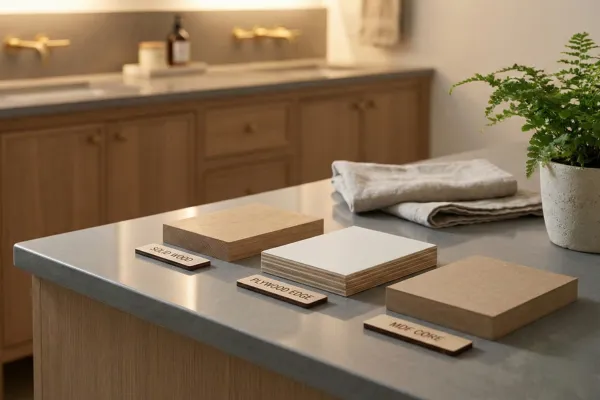
Solid wood bathroom vanities
Solid wood is often viewed as the premium option for bathroom vanity cabinets. It offers natural durability and a classic appearance.
Benefits of solid wood include:
Strong structural integrity
Long lifespan when sealed properly
Ability to be refinished
High-end appearance
However, solid wood can expand and contract with humidity changes. When properly sealed and constructed, this movement is controlled. Poorly finished wood, on the other hand, may be more vulnerable.
Solid wood is typically best suited for homeowners who care about longevity and craftsmanship.
Plywood construction
High-quality plywood is one of the most common materials used in custom bathroom vanity construction. It is made from layered wood veneers bonded together, which increases stability.
Plywood offers:
Strong resistance to warping
Better moisture tolerance than MDF
Excellent structural support
Reliable screw-holding strength
Because of its layered construction, plywood handles humidity changes more predictably than many alternatives. For many custom builds, it provides an ideal balance between durability and cost.
MDF bathroom vanities
Medium-density fiberboard, or MDF, is widely used in mass-produced cabinetry. It is made from compressed wood fibers bonded with resin.
MDF has some advantages:
Smooth surface for painted finishes
Lower material cost
Consistent appearance
However, MDF is more vulnerable to moisture damage if not sealed properly. In bathrooms with high humidity or frequent water exposure, materials can swell and wear out over time.
This does not automatically make MDF unusable, but its performance depends heavily on construction quality and finish protection.
Particleboard and lower-cost materials
Particleboard is typically found in budget cabinetry. It is made from wood chips bonded with adhesive.
While inexpensive, particleboard is:
Less durable
More prone to water damage
Weaker in structural strength
In humid areas, particleboard can break down fast if it gets wet. For long-term bathroom remodels, it is not recommended for vanity construction.
Moisture resistance and real-world performance
When evaluating bathroom vanity materials, moisture resistance should be a primary concern.
Bathrooms vary in how much humidity they generate. A guest bathroom used less often puts less stress on cabinets than a shared primary bathroom used daily by several people.
Factors that influence material performance include:
Ventilation quality
Frequency of showers
Amount of direct water exposure
Sealing and finishing quality
Even durable materials require proper finishing and sealing to withstand daily use.
Cost versus longevity
Material choice directly impacts cost, but it also affects how long the vanity will last.
Lower-cost materials may reduce the initial investment but can lead to earlier replacement or repair. Higher-quality materials often carry a higher upfront cost but provide better long-term value.
Homeowners should consider:
How long they plan to stay in the home
Whether the remodel is cosmetic or long-term
Daily usage demands
Desired resale appeal
The best material is not always the most expensive. It is the one that aligns with how the bathroom is used.
How custom cabinetry improves material performance
Custom bathroom vanity construction allows greater control over material selection and structural details.
With custom builds, homeowners can:
Choose moisture-resistant plywood cores
Upgrade to solid wood for specific components
Select finishes designed for high-humidity environments
Avoid lower-grade materials entirely
This flexibility ensures the vanity is designed for the specific bathroom rather than built to meet a broad price point.
Common mistakes homeowners make
Material decisions are often rushed during remodel planning.
Common mistakes include:
Choosing based solely on price
Ignoring humidity levels in the space
Assuming all wood products perform the same
Overlooking the importance of finishing and sealing
Careful evaluation prevents issues that may not appear until years later.
Key Takeaways
The best material for bathroom vanities depends on your bathroom’s humidity levels, daily usage, and long-term goals. Solid wood offers longevity and craftsmanship. Plywood provides stability and strong moisture resistance. MDF can work when properly sealed but is more vulnerable to moisture over time.
Lower-cost particleboard is generally not suited for long-term durability. Custom construction allows materials to be selected intentionally rather than by default.
Ready to choose the right vanity materials?
If you are planning a bathroom remodel, selecting the right materials from the beginning can prevent future repairs and extend the life of your cabinetry.
Use our quick form to share details about your bathroom, daily usage, and design goals. We will help you choose materials that match your space and build a vanity designed to last.

